
Information About Cursor
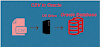
A Cursor is a pointer to a memory location where Oracle stores information about an executed SQL or DML statement. Whenever a SQL statement is processed, Oracle uses a cursor internally to manage execution and results.
What is a Cursor?
A cursor represents a context area in memory that contains:
- The executed SQL statement
- Number of rows processed
- Execution status and metadata
In simple terms, a cursor allows Oracle to track and control SQL execution in memory.
Implicit Cursor
An implicit cursor is automatically created and managed by Oracle.
- Created for every
SELECT,INSERT,UPDATE, orDELETE - Developer has no direct control over it
- Oracle automatically opens, executes, returns results, and closes it
Even though developers cannot control implicit cursors, runtime details can still be accessed using cursor attributes.
Explicit Cursor
An explicit cursor is defined and controlled by the developer.
- The cursor is explicitly named
- Rows can be processed one by one
- Developer controls opening, fetching, and closing
Explicit cursors provide full control over memory allocation and row-level processing, making them ideal for complex business logic.
Cursor Attributes
Cursor attributes provide runtime information about cursor execution. They help determine the current state and behavior of a cursor during processing.
Common use cases include checking whether a cursor is open, how many rows are affected, or whether the last fetch was successful.
Parameterized Cursor
A parameterized cursor improves reusability and flexibility.
- Same cursor can be reused in multiple scenarios
- Only the
WHEREcondition varies - Parameters are passed at runtime
This approach reduces redundancy and improves maintainability in PL/SQL programs.
Written for vikasapexian.com
Focused on Oracle APEX, PL/SQL architecture, and real-world development practices.


0 Comments